

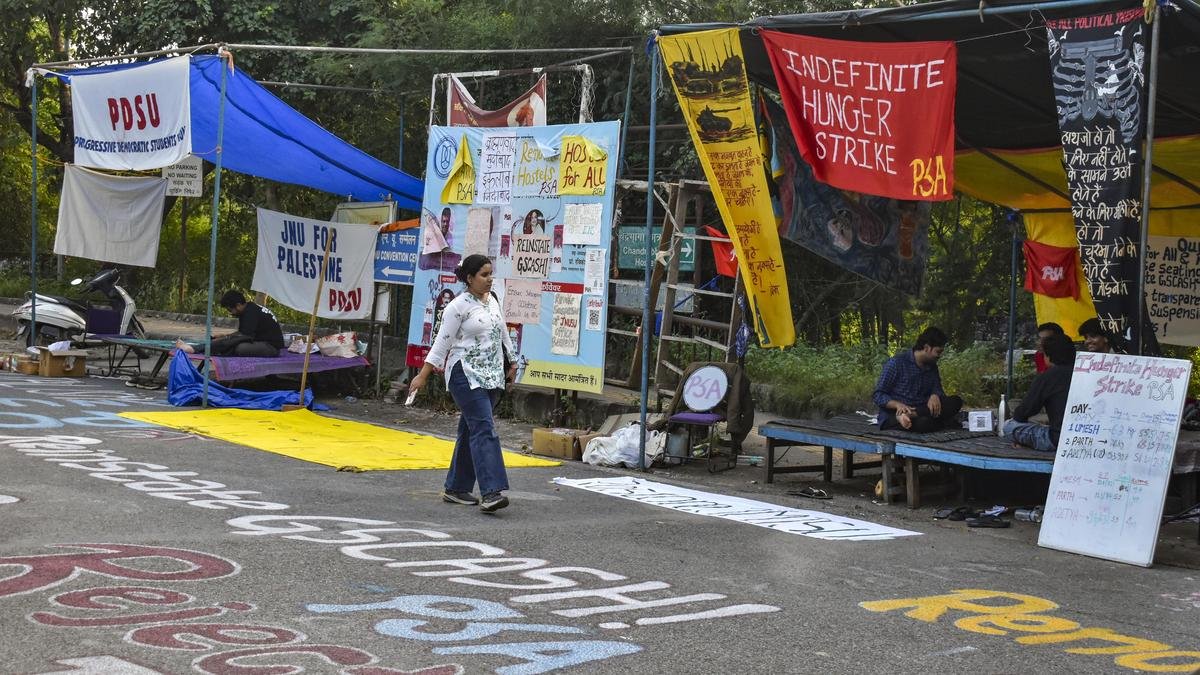
Image credit: The Hindu
A Long Wait Over: JNU Students End Hunger Strike
It’s been a tense two weeks at Jawaharlal Nehru University, and thankfully, the drama has ended. The JNUSU (Joint Students’ Union) has called off its 17-day hunger strike, and JNU has agreed to revoke the rustication orders against several of its office bearers. This isn’t just about a few students getting their names cleared; it’s a significant statement about student rights and the role of student bodies in Indian universities.
What Happened?
The initial spark for this protest was the decision to rusticate – essentially, to temporarily expel – several JNUSU representatives. The university administration cited violations of rules regarding a protest held earlier in the year. Details of *exactly* what those violations were are still somewhat murky, but the students and JNUSU consistently maintained they were exercising their right to peaceful assembly. The administration’s response, they argued, was disproportionate and politically motivated.
The hunger strike, initiated by JNUSU general secretary Sachin Kumar, gained considerable attention. Students, faculty, and even some alumni rallied in support. There were reports – and concerns – that the students involved in the strike weren’t receiving adequate medical care while fasting. The JNUSU repeatedly claimed this was happening, and it created a very uncomfortable situation for the university. It highlighted a worrying trend of universities reacting strongly to student dissent, sometimes silencing voices before a proper investigation could take place.
The Negotiation Process
After 17 days, a meeting between the JNUSU, the Vice-Chancellor, and other university officials resulted in an agreement. The rustication orders were formally revoked. While the specifics of the agreement haven’t been fully released to the public, it seems the university has agreed to reconsider its disciplinary actions and engage in a more transparent process for handling student grievances. This suggests a willingness to dialogue, which is crucial for maintaining a healthy academic environment.
It’s important to remember that this isn’t a single, isolated incident. We’ve seen similar protests at other Delhi University colleges and even at some universities outside the capital in recent months. It points to a growing frustration among students about issues like academic freedom, university governance, and the perceived lack of responsiveness from administration. Students are demanding more say in decisions that affect their lives and learning experiences.
What this means for students/parents
For the students involved, this is a huge relief. It’s a recognition that their voices matter and that the university administration needs to be accountable. For parents, it likely brings some peace of mind, knowing that their children are being treated fairly within the university system. However, this situation also raises questions about the broader climate at JNU and other Indian universities. It’s a reminder that student activism, while sometimes disruptive, is a vital part of a democratic university system.
For all students, this case underscores the importance of understanding your rights and knowing how to advocate for yourself. It also highlights the power of collective action – when students stand together, they can make a real difference. Parents, keep an open line of communication with your children and encourage them to participate constructively in university life, while also providing support if they face challenges.
Looking ahead, it will be interesting to see how JNU addresses the underlying issues that led to this protest. Greater transparency, a more accessible grievance procedure, and a commitment to upholding student rights are all essential for ensuring a vibrant and inclusive academic environment.
Based on reporting by The Hindu. Read the original report.


Leave a Reply