

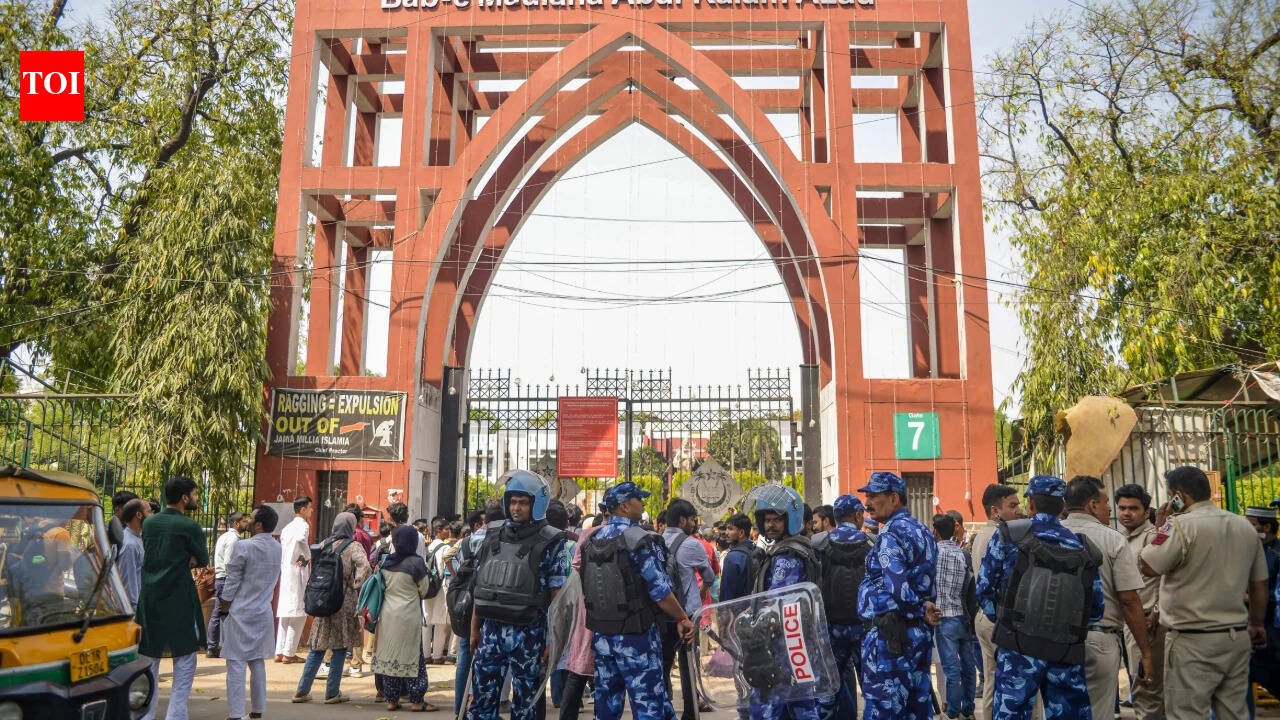
Image credit: The Times of India
Jamia Milia Protest: Students Allege Corruption and Strategic Shift to Online Classes
Protests at Jamia Millia Islamia (JMI) in Delhi have intensified, fueled by allegations of corruption and a controversial shift to fully online classes. Students claim this move is a deliberate tactic to circumvent recently dissolved student union elections and prevent the formation of a new representative body. The situation is further complicated by a significant police presence on campus and legal action against opposition Members of Parliament (MPs) who were present during a protest.
Background and Triggering Events
The unrest at JMI began earlier this year with a dispute over the restoration of student union elections. Following a period of suspended elections, the university administration announced a transition to fully online classes in October 2026. Students immediately voiced concerns, arguing that this decision was made without proper consultation and aimed to stifle student representation. The Times of India and other news outlets have reported on the escalating protests and police deployment.
Student Allegations of Corruption
Central to the students’ claims is the assertion that corruption has increased within the university administration. Specific details regarding the nature of this alleged corruption remain largely unconfirmed, but students allege a lack of transparency in decision-making processes related to the shift to online learning and the dissolution of the student union. They claim that financial resources allocated to the university are being mismanaged and that efforts are being made to prevent the formation of a new student union to avoid scrutiny.
The Shift to Online Classes – A Strategic Move?
University officials maintain that the transition to online classes was driven by logistical challenges and a desire to ensure uninterrupted academic continuity. A statement released by the JMI administration on October 20, 2026, cited “security concerns” and the need to “maintain academic standards” as justification for the change. However, students contend that this is a calculated move to avoid accountability and prevent the student union from gaining power. The Telegraph India reported that the online switch occurred amidst protests demanding the restoration of union elections.
Police Action and Legal Consequences
The Delhi Police have deployed a significant number of officers around the JMI campus to maintain order. On October 24, 2026, the police filed a First Information Report (FIR) against several opposition MPs who were present during a student protest. The charges relate to alleged trespassing and disruption of public order. This action has drawn criticism from student activists and political opponents, who argue that the police response is disproportionate to the situation.
Hunger Strike and Ongoing Protests
As of October 25, 2026, students have been participating in a hunger strike on campus, despite the university’s declared shutdown and threats of hostel eviction. The New Indian Express reported that hundreds of students are involved in the ongoing demonstration. The protests are demanding the immediate restoration of student union elections and a thorough investigation into the allegations of corruption.
Official Statements and University Response
The JMI administration has issued several statements regarding the situation, emphasizing its commitment to maintaining academic standards and addressing student concerns. However, they have largely avoided directly addressing the allegations of corruption. The university’s website () currently provides limited information regarding the transition to online classes and the reasons behind the decision. Further details regarding the FIR filed against the MPs are expected to be released by the Delhi Police.
Moving Forward
The situation at Jamia Millia Islamia remains volatile. The core issues – alleged corruption, the shift to online classes, and the suppression of student representation – are yet to be resolved. The ongoing protests and legal proceedings will likely continue to dominate the campus and attract public attention. The outcome of this dispute will have significant implications for student governance and academic autonomy at JMI, and potentially serve as a case study for other universities facing similar challenges.
Based on reporting by The Times of India. Read the original report.


Leave a Reply