

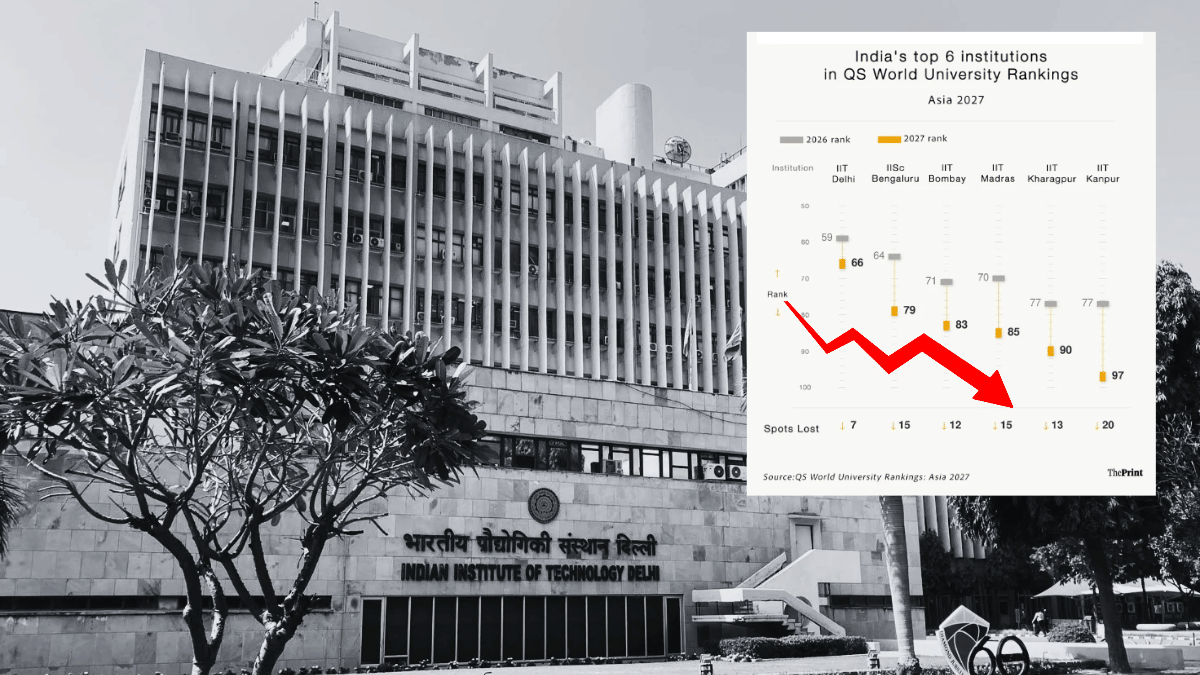
Key Findings of the QS Asia University Rankings 2027
Indian universities have experienced a further decline in the QS World University Rankings: Asia 2027, with no Indian institutions ranking within the top 50 for the second consecutive year. This trend reflects challenges in academic and employer reputation, internationalization, and research impact.
Performance of Top Indian Institutions
All six of India’s highest-ranked institutions – IIT Delhi, IIT Bombay, IISc Bangalore, IIT Madras, IIT Kharagpur, and IIT Kanpur – have slipped in the rankings. Specifically:
- IIT Delhi fell seven places to 66th.
- IISc Bangalore dropped 15 places to 79th.
- IIT Bombay slipped from 71st to 83rd.
- IIT Madras fell from 70th to 85th.
- IIT Kharagpur moved from 77th to 90th.
- IIT Kanpur decreased from 77th to 97th.
The last time an Indian institution appeared in the top 50 was in 2024, when IIT Delhi ranked 44th and IIT Bombay 48th.
India’s Growing Representation in the Rankings
Despite the decline, India now has the second-highest number of universities represented in the QS Asia rankings, after Mainland China. The total number of universities in the rankings has increased to 325 from 24 since 2016.
Factors Contributing to the Decline
The QS rankings point to weaknesses in academic and employer reputation, alongside issues with internationalization and research impact. Specifically, 76% of Indian universities recorded a decline in Academic Reputation scores, and 83% saw a decrease in Employer Reputation scores. Internationalization and research impact also show declines, with only 15% of universities improving their International Students scores and 89% experiencing a drop in inbound exchange, and 89% in outbound exchange.
Research Impact – A Mixed Picture
While India leads Asia in the number of institutions in the top 10 for Papers per Faculty (with 15 universities sharing first place), 77% of Indian universities with comparable rankings experienced a decline in their Citations per Paper scores. National expenditure on research and development remains at approximately 0.64% of GDP.
Looking Ahead
According to Ben Sowter, QS Senior Vice President, India has a strong foundation for future growth. Investment in research quality, international partnerships, and global visibility are crucial. The QS office notes that the long-term trend for Indian institutions is positive, with a significant increase in representation since 2016.
Regional Trends
Several countries experienced declines in their university rankings, including Japan (85%) and Taiwan (70%). Mainland China and Hong Kong SAR strengthened their positions, occupying the top five spots in the overall rankings.
Source: ThePrint. Featured image credit: ThePrint.


Leave a Reply