

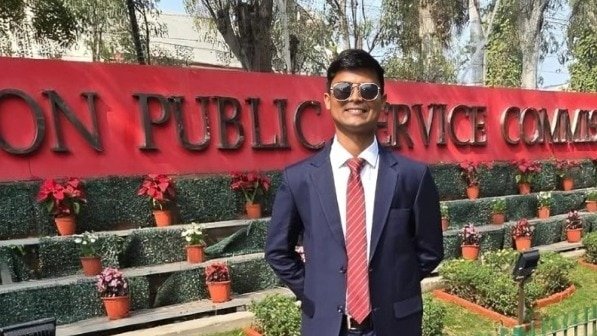
Image credit: India Today
UPSC Success: Plan B Crucial – AIR 812 Story
A young man from Maharashtra has emerged as an inspiration for aspiring civil servants, achieving a coveted All India Rank (AIR) of 812 in the Union Public Service Commission (UPSC) examination. This success, however, wasn’t achieved in a single attempt. He secured the rank after four previous attempts, a journey he attributes to the crucial role of having a “Plan B” – a secondary strategy for his career aspirations.
The Journey and Initial Setbacks
The individual, identified as Rohan Patil, a son of a farmer from Yavatmal district, initially began preparing for the UPSC exam in 2023. His first three attempts didn’t yield the desired results. According to reports from India Today, Patil initially focused heavily on conventional study methods, dedicating almost all his time to intense preparation. While he demonstrated significant potential, he consistently fell short of the required score to secure a position in the Civil Services.
“I realized that simply studying more wasn’t enough,” Patil stated, as reported by India Today. “I needed a more structured approach and a backup plan if the main one didn’t work out.” This realization prompted him to re-evaluate his strategy.
The Shift to ‘Plan B’ – A Focused Approach
Patil’s “Plan B” involved pursuing a Master’s degree in Public Administration from a recognized university. This decision allowed him to deepen his understanding of governance, policy analysis, and administrative processes – areas directly relevant to the UPSC syllabus. Simultaneously, he continued to engage with UPSC preparation, focusing on identified weaknesses and refining his approach. He utilized online resources, mock tests, and mentorship to bolster his chances.
“The Master’s program gave me a solid foundation and a different perspective,” Patil explained. “It wasn’t a distraction; it was an investment in myself and my future.”
UPSC Results and Significance
Rohan Patil’s success in the 2026 UPSC exam, securing an AIR of 812, is a testament to his perseverance and the effectiveness of his strategic shift. The AIR ranking indicates that he qualified for a probationary officer position in the Indian Administrative Service (IAS) or other central services. The UPSC website () provides detailed information about the examination process, syllabus, and previous year’s results.
The case of Rohan Patil highlights a key principle in competitive examinations: adaptability and a well-defined contingency plan. While consistent effort is undoubtedly vital, a flexible approach that acknowledges potential challenges and incorporates alternative paths can significantly improve the odds of success. It’s a valuable lesson for all aspirants, particularly those facing initial setbacks.
Practical Implications for Aspiring Candidates
* **Assess Your Weaknesses:** Don’t just focus on your strengths. Identify areas where you struggle and seek targeted improvement.
* **Diversify Your Preparation:** Incorporate different study methods, including mock tests, group discussions, and mentorship.
* **Develop a Backup Plan:** Consider pursuing further education or exploring alternative career paths that align with your interests and skills.
* **Maintain a Positive Mindset:** Perseverance and a belief in your abilities are crucial for overcoming challenges.
For detailed information about the UPSC examination, including eligibility criteria, syllabus, and application procedures, refer to the official UPSC website:
Based on reporting by India Today. Read the original report.


Leave a Reply