

Recent Advances in Boron Chemistry: Isolation of Stable Oxoboranes
A team of researchers has reported the isolation of stable, free oxoboranes – compounds featuring a genuine B–O triple bond – for the first time. This breakthrough, detailed in a recent publication in Nature, represents a significant advancement in the field of boron chemistry and has implications for materials science and chemical synthesis.
Key Findings and Methodology
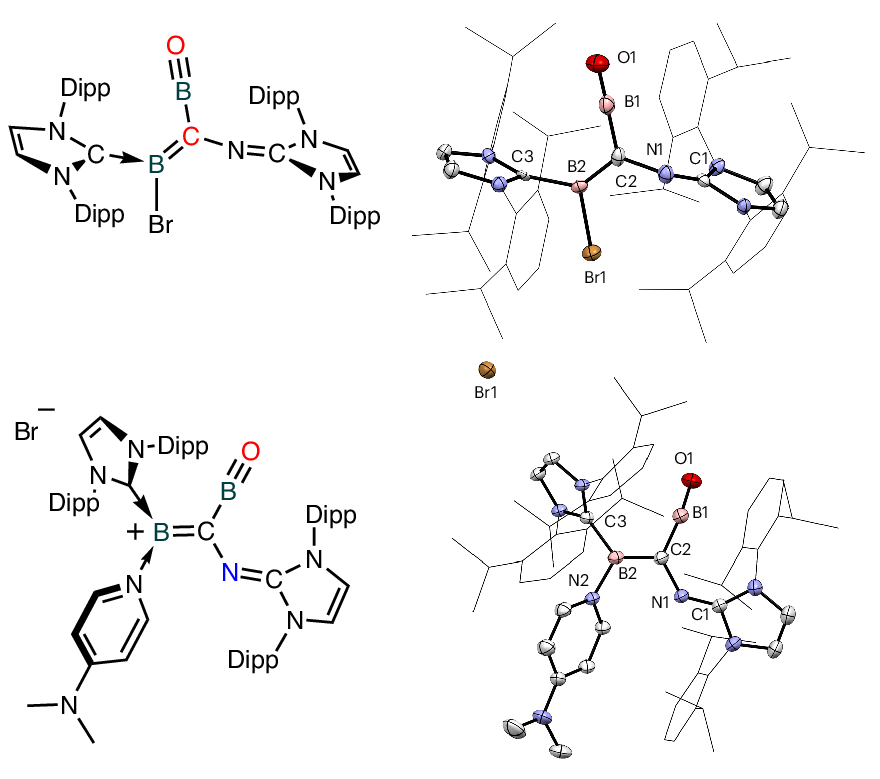
The research, led by Bingham and Cohrssen, utilized a carbon-monoxide-triggered transformation of a heterocumulene to generate these previously elusive oxoboranes. Single-crystal X-ray diffraction confirmed the presence of a terminal B≡O unit, indicating a highly polarized triple bond. The mechanistic studies revealed a carbon monoxide coordination–insertion–isomerization pathway, contributing to the ambiphilic reactivity of the resulting oxoboranes, allowing for the creation of both neutral and cationic derivatives.
Characterization and Stability
The isolated oxoboranes exhibited stability under condensed-phase conditions, a crucial factor for practical applications. Crystallographic data for the structures were deposited at the Cambridge Crystallographic Data Centre under deposition numbers CCDC 2542988 (for 1), 2542991 (for 2), 2542992 (for 3), 2542989 (for 4) and 2542990 (for 5). Further characterization data and the raw data are available in the Supplementary Information.
Reactivity and Potential Applications
These oxoboranes demonstrate ambiphilic reactivity, suggesting potential uses in various chemical reactions. This opens possibilities for creating new materials and exploring fundamental chemical principles. Previous research, cited in the publication, has explored related boron compounds and their reactivity, including the synthesis of a 1,3-dioxa-2,4-diboretane precursor and the study of methylboron oxide.
Future Directions
Researchers are now focusing on exploring the full range of reactivity of these isolable oxoboranes. Recent studies have demonstrated the synthesis of related compounds, such as neutral diboron-containing heterocumulenes and bridged boranoanthracenes, highlighting the ongoing progress in this area. Future research will likely investigate the use of these compounds as building blocks for more complex molecules and materials.
Relevant References
- Bingham, E. & Cohrssen, B. Patty’s Toxicology, 6 Volume Set (Wiley, 2012).
- Hall, D. G. Structure, properties, and preparation of boronic acid derivatives. Overview of their reactions and applications. In Boronic Acids: Preparation and Applications in Organic Synthesis and Medicine 1–99 (Wiley-VCH, 2005).
- DeFrancesco, H., Dudley, J. & Coca, A. in Boron Reagents in Synthesis. Vol. 1236, Ch. 1 (American Chemical Society, 2016).
Source: Nature. Featured image credit: Nature.


Leave a Reply