

Image credit: The Times of India
Meet Ashaatti Ammumma: A New Approach to Literacy in Kerala
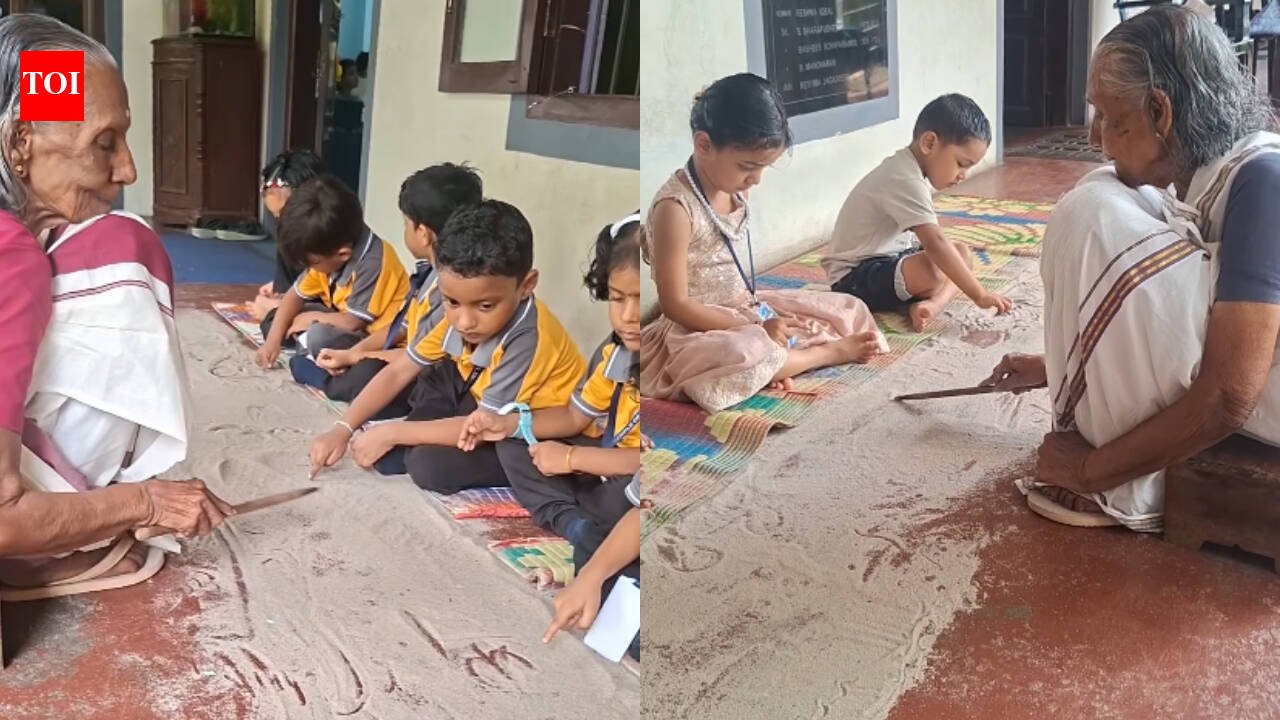
Ashaatti Ammumma, a grandmother from Kerala, India, is capturing the attention of educators and parents with her unconventional method of teaching children to write – using sand. This unique approach, documented by The Times of India, is proving to be a surprisingly effective and engaging way to foster early literacy skills.
The Concept: Writing in the Sand
Ashaatti Ammumma’s technique involves creating a large, flat expanse of sand – typically a beach or a designated area – and guiding children to form letters and words by drawing in the sand. Rather than traditional chalkboards or paper, the sand serves as a tactile and visually stimulating learning surface. The initial reports suggest that the children are learning to recognize and replicate letter shapes, and eventually, form simple words. The process is designed to be playful and less intimidating than traditional writing methods, particularly for younger learners.
How It Works – A Practical Approach
According to reports, the method begins with identifying individual letters. Ashaatti Ammumma demonstrates the shape of each letter in the sand, encouraging the children to trace it with their fingers. She then moves on to simple words, building upon the letter recognition skills. The sand’s inherent disposability also removes the pressure of making mistakes, fostering a more relaxed learning environment. The sand allows for immediate feedback – children can easily erase and try again.
Official Confirmation and Supporting Information
While there are currently no official government initiatives or standardized curriculum incorporating this specific sand writing method, the growing interest has prompted some educational discussions. The Times of India article, published on October 24, 2026, highlighted the enthusiasm of parents and teachers observing the children’s progress. Further, a local educational forum in Kerala, ‘Prerana Shiksha Samithi,’ has discussed the concept, acknowledging its potential benefits for early childhood development.
Eligibility and Implementation – Current Status
Currently, Ashaatti Ammumma’s teaching is a grassroots initiative. There are no specific eligibility criteria or standardized procedures. Anyone interested in implementing a similar approach would likely need to adapt it to their local context, considering factors such as sand availability and the children’s age and developmental stage. The primary focus is on creating a supportive and playful environment where children can explore literacy in a novel way.
Potential Benefits and Considerations
This method offers several potential benefits. It’s particularly appealing for children who struggle with traditional writing tools or who find the act of writing daunting. The tactile nature of the sand can enhance sensory learning, and the visual element can be highly engaging. However, it’s important to note that this technique is best suited for foundational literacy skills – recognizing and replicating letter shapes. It may not be suitable for teaching complex grammar or advanced writing techniques.
Resources and Further Information
While there isn’t a specific website dedicated to Ashaatti Ammumma’s method, exploring resources on early childhood literacy and tactile learning can provide valuable insights. The National Council of Educational Research and Training (NCERT) offers guidelines for early childhood education, including approaches to developing fine motor skills and pre-literacy skills: https://ncert.nic.in/. Furthermore, local educational boards in Kerala may have resources available on promoting literacy in innovative ways.
The story of Ashaatti Ammumma highlights the power of simple, creative approaches to education. Her dedication to making learning fun and accessible is inspiring, and her method offers a refreshing perspective on how to nurture young minds.
Based on reporting by The Times of India. Read the original report.


Leave a Reply