

New Method for Creating Chiral Phosphorus Compounds
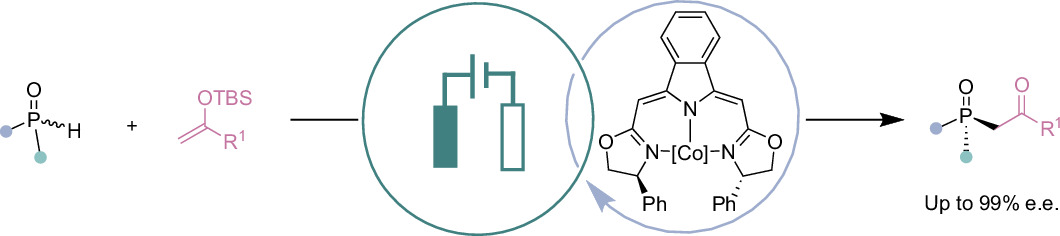
Researchers have developed a new method for creating chiral phosphorus compounds using a cobalt catalyst and electrochemical techniques. This advancement, published in Nature, offers a more efficient and stereoselective route to these important building blocks for various chemical syntheses.
The Challenge of Phosphinoyl Radicals
Generating and controlling phosphinoyl radicals – crucial intermediates in this process – has traditionally been difficult due to their transient nature and lack of predictable stereochemistry. The research team addressed this challenge by combining asymmetric Lewis acid catalysis with anodic oxidation.
How the New Method Works
The integrated platform utilizes a Lewis acid-coupled electron-transfer mechanism. This directs radical generation while creating a confined chiral environment, governing stereoselective bond formation. The process enables intermolecular coupling under mild conditions, resulting in excellent enantioselectivity – up to 99% enantiomeric excess – and access to a wide range of P(V)-stereogenic compounds.
Mechanistic Insights
Detailed mechanistic studies, including electrochemical analysis, radical-clock experiments, and density functional theory calculations, confirmed the proposed pathway and the origin of the stereocontrol. These studies provide a deeper understanding of the catalytic process.
Key Details and Confirmation
The crystallographic data for the structure reported in the article has been deposited at the Cambridge Crystallographic Data Centre, under deposition numbers CCDC 2520748 (1b), 2520749 (3), 2520750 (6), 2520751 (36), 2520752 (38) and 2520753 (51). NMR data, HRMS data, X-ray crystallography data and optimized coordinates are available via Zenodo at https://zenodo.org/records/23306985 (ref. 54), under the Creative Commons Attribution 4.0 International license.
Related Research
This work builds upon previous research in the field, including studies on P-chirogenic phosphorus compounds (Dutartre et al., 2016), nucleoside phosphate and phosphonate prodrugs (Pradere et al., 2014), and stereoselective oligonucleotide synthesis (DiRocco et al., 2017). Further advancements have been made in related areas, such as enantioselective hydrophosphorylation (Mondal et al., 2021) and the synthesis of chiral phosphines (Beaud et al., 2016; Dai et al., 2019).
Future Steps
Researchers are continuing to explore the potential of this platform and investigate its application to the synthesis of other complex molecules. Recent studies have focused on improving the efficiency and generality of the process, including the development of second-generation catalytic enantioselective nucleophilic desymmetrization at phosphorus (V) (Formica et al., 2024).
Source: Nature. Featured image credit: Nature.


Leave a Reply