

Overview
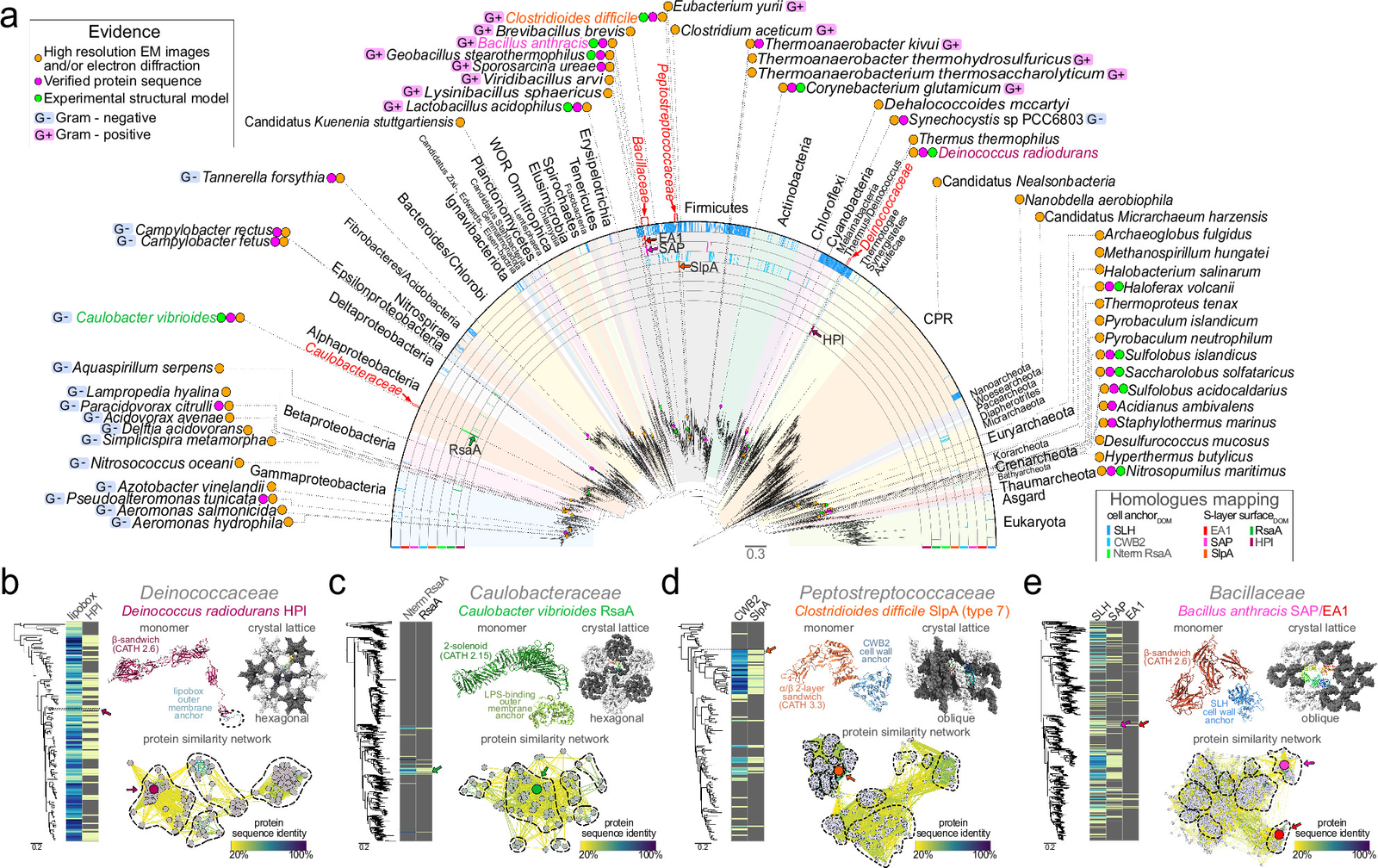
A recent study published in Nature investigated the evolutionary plasticity of bacterial surface layer (S-layer) proteins. Researchers examined the genetic makeup and structure of S-layers in various bacterial species, focusing on how these structures contribute to bacterial survival and pathogenicity.
Key Findings
The research demonstrated that S-layer proteins exhibit a high degree of sequence diversity and modular evolution. This means that S-layer proteins can change significantly between different bacterial lineages, and that they are built from distinct, interchangeable modules.
Lateral gene transfer, the transfer of genetic material between bacteria, also plays a significant role in shaping S-layer diversity. This process contributes to the rapid spread of new S-layer architectures across bacterial populations.
Focus on *Clostridioides difficile*
The study specifically analyzed *Clostridioides difficile* (formerly *Clostridium difficile*), a pathogen known for causing severe infections. Researchers discovered that different clinical isolates of *C. difficile* utilize distinct S-layer structures, even though they share similar protein sequences. These variations allow the bacteria to evade the host’s immune system.
Experimental data confirmed that only pathogenic strains of *Peptostreptococcus* (a closely related genus) possess resistance to the antimicrobial effectors LL-37 and lysozyme, highlighting the link between S-layer diversity and immune evasion.
Structural Insights
The researchers determined the structures of two S-layer types from *C. difficile*, revealing how the proteins assemble into complex, crystalline lattices. These structures are remarkably diverse among clinical isolates, driven by mechanisms such as (intra)domain gains and losses, sequence divergence, and recombination.
Broader Implications
This research establishes the S-layer as a prime example of molecular modularity and evolutionary plasticity. The ability of a single protein to rapidly reconfigure the cell surface has significant implications for bacterial adaptation and pathogenesis. The findings have relevance for biotechnology, including potential applications in bio-product design, drug delivery, and vaccine development.
Further Research
Researchers suggest that continued investigation into S-layer evolution is crucial for understanding bacterial pathogenesis and developing new therapeutic strategies. Further studies are needed to fully characterize the functional diversity and ecological significance of S-layers across different bacterial taxa.
Source: Nature. Featured image credit: Nature.


Leave a Reply