

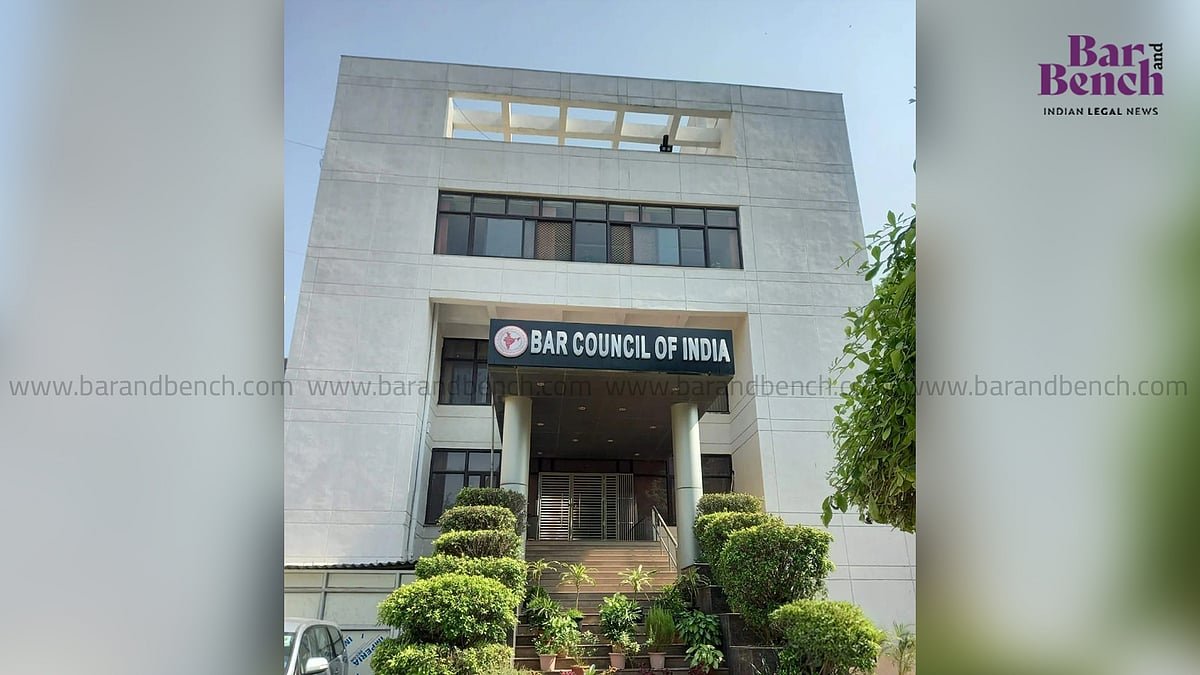
Bar Council of India Issues Advisory on Institution Verification
The Bar Council of India (BCI) has instructed law aspirants to independently verify the authenticity and BCI approval status of institutions before enrolling for law courses. This follows a directive from the Supreme Court in the case of Ayesha Jain v. Amity University.
Supreme Court’s Previous Order
On October 9, the Supreme Court directed the University Grants Commission (UGC) and other regulatory bodies to caution students about verifying the legitimacy of institutions. This latest advisory from the BCI is a direct response to that order.
Key Requirements for Verification
According to the BCI, students must confirm that the institution is legally authorized to offer the specific law degree program. Furthermore, the degree must meet the requirements for recognition by the BCI for enrollment as an advocate, as outlined in the Rules of Legal Education, 2008.
BCI Website Resources
The BCI maintains a list of approved institutions and courses on its website. Prospective students are advised to consult this list to ensure the institution’s validity. The list is available at [https://www.bci.nic.in/](https://www.bci.nic.in/)
Specific Checks to Perform
Students should specifically check if the institution holds valid approval for either the three-year LL.B. course or the five-year integrated law degree. They should also verify that the number of sections and student intake align with the BCI’s approval.
Important Clarifications
The BCI emphasized that approval for one program does not automatically extend to others. Universities and colleges must accurately represent their approval status and any limitations.
Consequences of Non-Compliance
Admission without the necessary BCI approval may negatively impact the recognition of the qualification for enrollment as an advocate. Institutions providing false information or operating without approval may face legal action under the Advocates Act, 1961, following due process.
Publicity and Dissemination
All universities and centers of legal education (CLEs) are required to widely publicize this advisory through their official websites, admission notices, prospectuses, and prominent notice boards.
Source: Bar and Bench. Featured image credit: Bar and Bench.


Leave a Reply