

Precise Membrane Spacing Control Developed
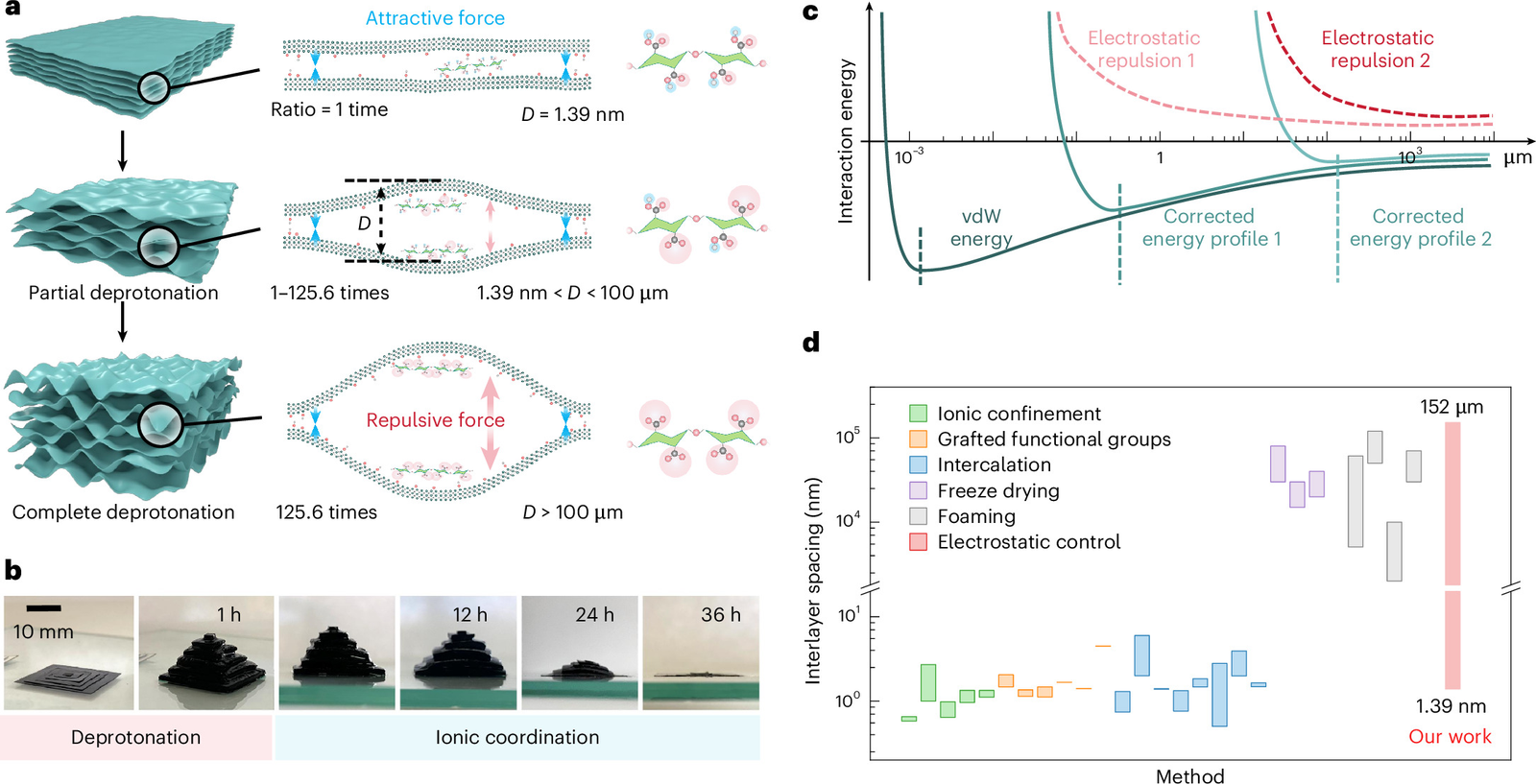
Researchers have demonstrated a method for precisely controlling the spacing between layers in two-dimensional materials, achieving unprecedented levels of tunability. The research, published in Nature, details a strategy involving deprotonation and ion coordination to adjust interlayer spacing from nanometres to micrometres.
Key Findings and Capabilities
The technique allows for expansion of the interlayer spacing across a range of five orders of magnitude. Specifically, the researchers achieved porosity ranging from 0% to 78%, with interlayer spacing varying from 1.39 nm to 152 μm, and membrane thicknesses from 43 μm to 5,400 μm. This level of control enables on-demand customization of membrane properties.
Mechanism of Action
The interlayer expansion is driven by electrostatic repulsion resulting from the deprotonation of intercalated cellulose nanofibers. This expansion is then reversibly tuned through the coordination of cations, providing a controllable mechanism.
Performance Enhancements
The research highlights several performance enhancements achieved through controlled membrane expansion. A slight expansion to 1.48 nm increased zinc-ion capacitance by 67% compared to non-expanded membranes. Approximately 2.2 × 10⁴-fold expansion to ~30 μm raised osmotic energy conversion power by 63%, and a 105-fold expansion to ~140 μm unlocked exceptional pressure sensing capabilities.
Generalizability
The researchers suggest that this strategy is applicable to various van der Waals materials, establishing a generalizable paradigm for nanometric microstructure engineering. This approach offers a pathway to customize device performance using a single membrane platform.
Further Information
This research represents a preview of subscription content. Access may require institutional affiliation. Further details are available via Nature.
Source: Nature. Featured image credit: Nature.


Leave a Reply