

New Research on Tidal Turbine Blades
Researchers at the University of Edinburgh have developed flexible rubber blades for tidal turbines, presenting a potentially cheaper and more reliable method of generating energy from the tides. The findings, published in Nature, suggest these blades could significantly reduce maintenance costs and improve turbine performance.
The Challenge of Tidal Energy
Tidal power is considered a valuable renewable energy resource due to its predictable nature. However, the turbulent conditions of the sea create significant hydrodynamic loads on turbines. Current turbines often use complex and expensive active pitch systems to manage these fluctuations.
Flexible Rubber Blade Design
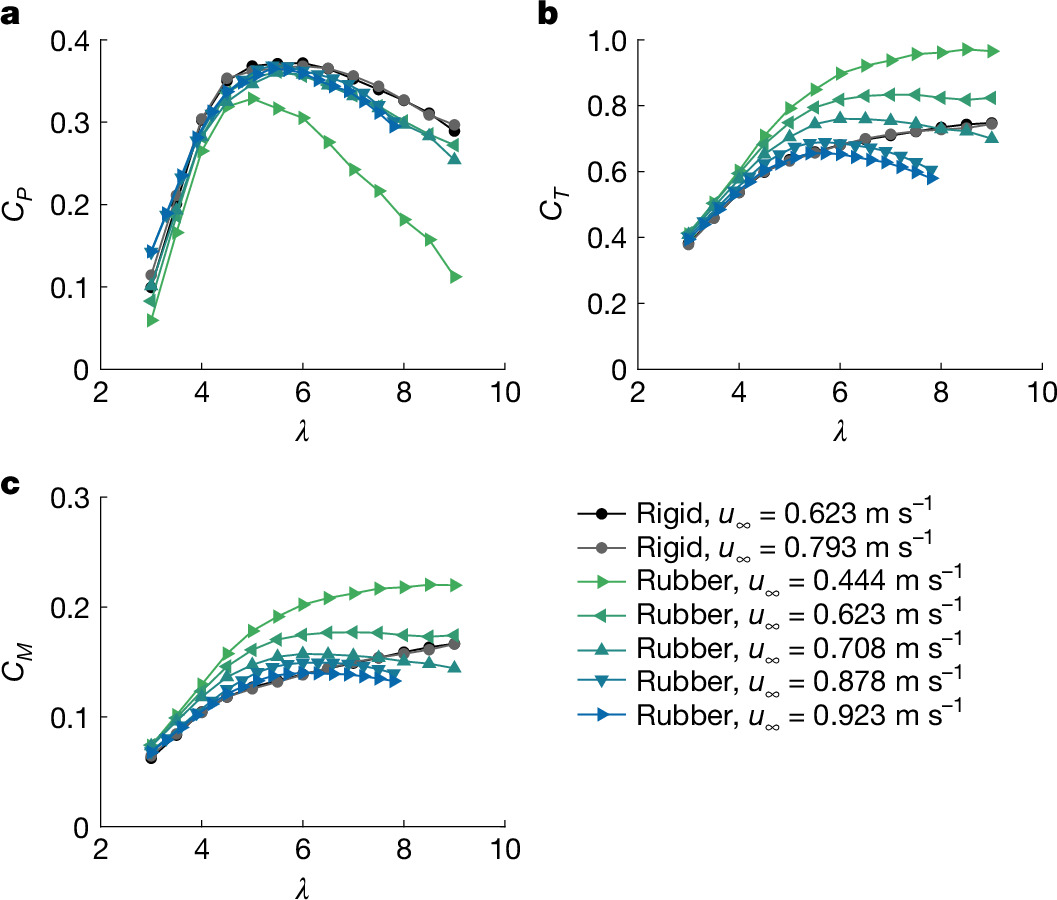
The research team’s innovation involves using blades constructed from rubber that can deform – specifically, change their camber along the chord. This “chordwise trailing-edge deformation” allows the blades to flatten under load, providing passive load regulation. According to the research, this reduces high-frequency fatigue-inducing load fluctuations by up to one-third.
Experimental Results
Experimental testing demonstrated that the flexible rubber blades achieved an equivalent total energy yield compared to turbines with rigid blades and active pitch control over simulated tidal cycles. This suggests a viable alternative to existing turbine technology.
Potential Benefits
The passive load regulation offered by these flexible blades could enhance the durability of tidal turbines. The design avoids the mechanical complexity of active pitch systems, potentially lowering maintenance costs and improving the overall reliability of tidal energy generation.
Next Steps
Further research will focus on scaling up the technology and assessing its performance in real-world tidal environments. The researchers believe this innovation represents a promising pathway towards more cost-effective and dependable tidal energy.
Source: Nature. Featured image credit: Nature.


Leave a Reply