

New Algorithm for Identifying Anomalies
A new algorithm has been developed to identify abnormal power limitations in photovoltaic power generation. The research, published in Nature, focuses on detecting power curtailment anomalies, which are difficult to identify using standard methods.
The Problem of Curtailment Anomalies
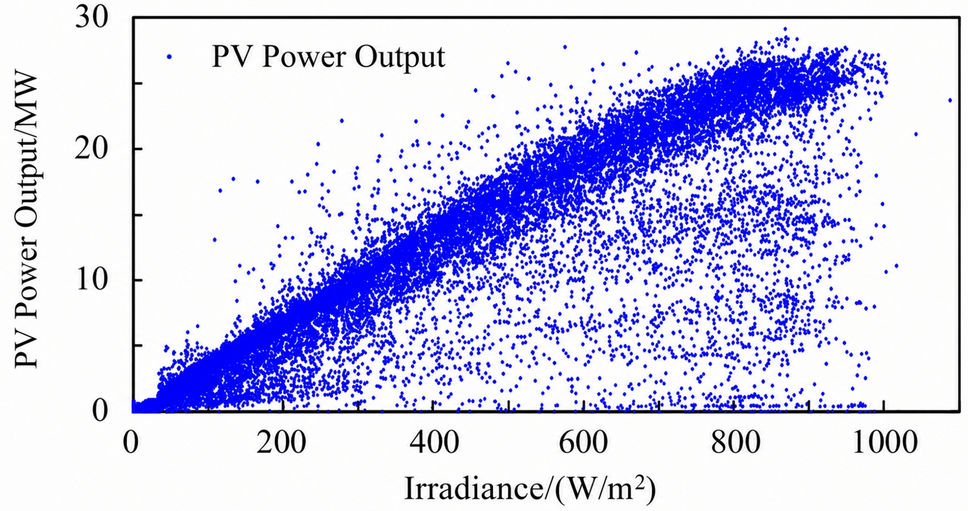
Power curtailment anomalies in photovoltaic power generation arise from sudden and mandatory curtailment operations. These events disrupt the typical patterns of data, making them challenging for conventional anomaly detection algorithms to recognize. These algorithms typically rely on assumptions about data distributions or established models.
The Proposed Solution
The proposed algorithm treats power curtailment anomalies as noise and utilizes mathematical morphology denoising operations – specifically dilation and erosion – to identify them. It does not require assumptions about the distribution of the original data.
Methodology and Results
The algorithm was tested using data collected from a photovoltaic power station in Gansu Province. Simulations showed that it significantly improved the recognition rate of power curtailment anomalies compared to methods like the 3-sigma rule and theoretical empirical formulas.
Categories of Anomalies
Anomalous data in photovoltaic power output datasets can be primarily divided into two categories: missing and deviation anomalies, and power curtailment anomalies.
Future Steps
Data scientists and machine learning engineers need to collect large datasets for these types of problems. Further research is needed to address limitations such as reliance on empirical patterns and insufficient consideration of random fluctuations in power output.
Source: Nature. Featured image credit: Nature.


Leave a Reply