

Efficient Prime Editing in Dicot Crops
On October 28, 2026, Nature published a report detailing the development of SmartPE, a new prime editing system designed to improve efficiency in dicot plants. According to the report, prime editing in dicot plants has historically been limited by low efficiency and variability, hindering its widespread application.
What is SmartPE?
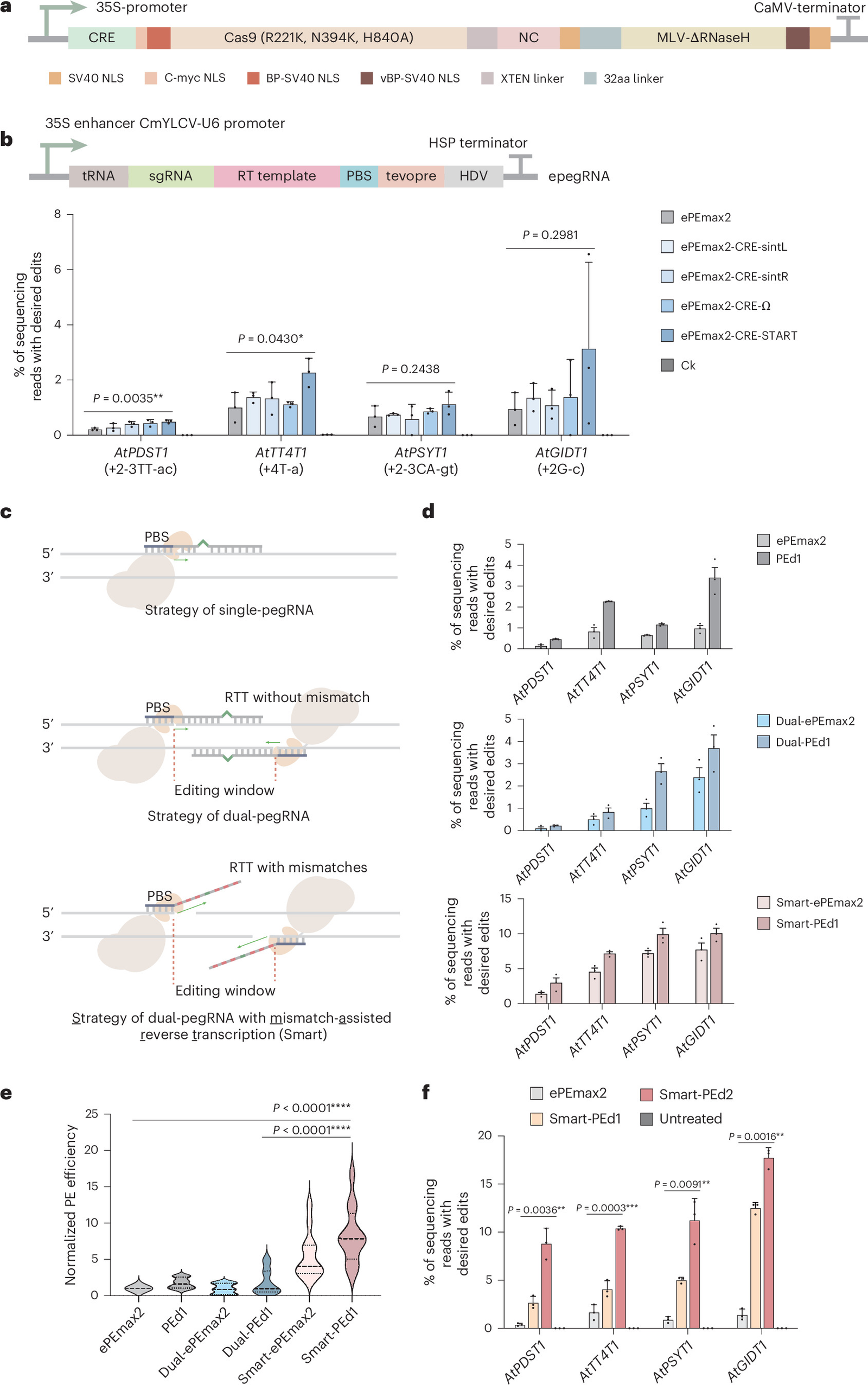
SmartPE combines a dual-pegRNA strategy with designed mismatched bases in the reverse-transcription templates (RTTs), alongside cis-regulatory elements and engineered reverse transcriptases. This combination has resulted in a substantial increase in editing efficiency.
Key Findings and Improvements
Experiments conducted on protoplasts of Arabidopsis thaliana, tomato, soybean, and oilseed rape demonstrated improvements of 6.3–23.0-fold, 8.2–38.2-fold, 10-fold, and 10-fold respectively, compared to conventional prime editing systems. In tomato hairy roots, SmartPE generated homozygous edits at the SlOR2 locus at a rate of 7.3%, heterozygous edits at 12.5%, and only 1.0% heterozygous edits with chimeras using standard PE. Stable transformation experiments achieved up to 32.3% editing efficiency in Arabidopsis and successful insertion of tags and enhancers in tomato.
Further Details
The study’s findings, supported by data deposited in an NCBI BioProject database (accession no. PRJNA1337775), highlight the potential of SmartPE for dicot species. Researchers utilized a variety of established techniques, including Agrobacterium rhizogenes-mediated hairy root transformation and the pBI121 plant expression vector.
Next Steps and Reader Action
The research team, led by Yijing Liu and Chao Sun, continues to explore the capabilities of SmartPE. Further research is ongoing to optimize the system and expand its applications in crop improvement. Readers can follow updates on this research through publications in journals such as *J. Exp. Bot.* and *Genome Biol*.
Support for this research was provided by the National Key R&D Program of China, the National Natural Science Foundation of China, and the New Cornerstone Science Foundation. The authors contributed equally: Yijing Liu, Chao Sun.
Source: Nature. Featured image credit: Nature.


Leave a Reply