

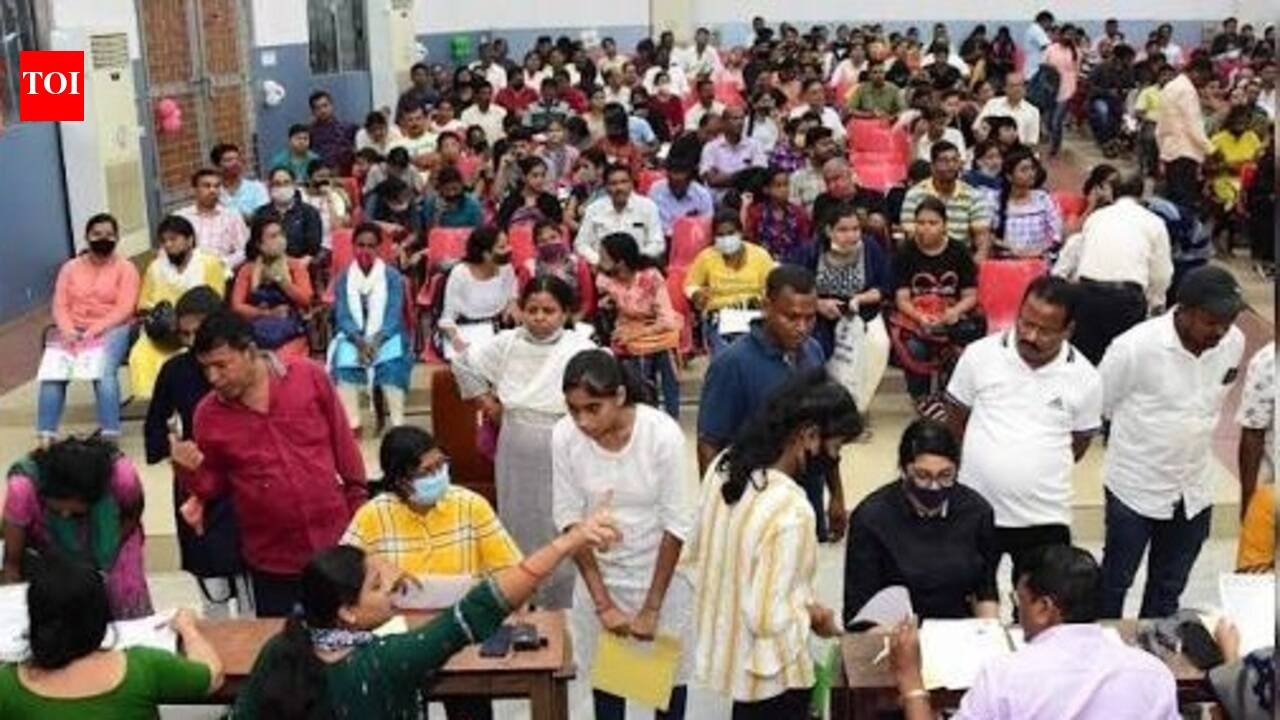
Image credit: The Times of India
UG Seat Vacancies Rise: Physical Science & Commerce Struggle
A considerable number of undergraduate seats remain unfilled across India’s higher education system, according to a report in *The Times of India* published on October 24, 2026. Data indicates that approximately 46% of undergraduate seats in various universities and colleges are currently vacant. This represents a notable increase compared to previous years and raises concerns about the alignment of academic offerings with student interests and industry demands.
Key Findings from the Report
The *Times of India* report specifically highlighted a disproportionate number of vacant seats within the Physical Science and Commerce streams. While overall enrollment figures remain stable, the significant shortfall in these areas is drawing attention. The report does not provide a detailed breakdown of the reasons for this trend, but acknowledges a broader shift in student preferences towards more specialized and technology-focused fields. No official figures were released detailing the percentage of vacancies across all streams, only the overall 46% figure and the specific issue with Physical Science and Commerce.
Impact on Universities and Colleges
These unfilled seats have direct financial consequences for educational institutions. Universities and colleges rely on student fees to fund operations, research, and infrastructure development. A substantial number of vacant seats translate to reduced revenue streams. Furthermore, institutions may be forced to adjust faculty hiring plans and potentially scale back academic programs, particularly in the affected streams. The Indian Council for Higher Education (ICHED) has not yet issued a statement regarding the implications of these vacancies.
Potential Contributing Factors
Several factors could be contributing to this trend. A growing interest in fields like Artificial Intelligence, Data Science, and Cybersecurity is driving students towards STEM (Science, Technology, Engineering, and Mathematics) disciplines. The increasing availability of online and vocational training programs, offering quicker routes to employment, may also be diverting students away from traditional undergraduate degrees. Economic factors, such as concerns about job prospects and the cost of higher education, are also believed to play a role. It’s important to note that the report doesn’t offer definitive causal links, but these are commonly cited potential drivers.
Examining the Physical Science and Commerce Streams
The specific challenges within Physical Science and Commerce are noteworthy. Historically, these streams have been popular choices, but recent data suggests a decline in applications. Within Physical Science, subjects like physics, chemistry, and mathematics continue to face the greatest challenge. Commerce, encompassing fields like economics, accounting, and business administration, also experiences a significant number of unfilled seats. The reasons for this shift are likely multifaceted, potentially including perceived difficulty of the coursework, limited perceived career opportunities, and evolving industry needs that don’t always align with current curriculum offerings.
Looking Ahead: Recommendations and Considerations
Addressing this issue requires a collaborative effort between educational institutions, policymakers, and industry stakeholders. Universities should conduct thorough needs assessments to understand evolving student interests and adapt their curricula accordingly. Incorporating more practical, industry-relevant skills into the curriculum is crucial. Furthermore, promoting the career prospects within the Physical Science and Commerce streams through targeted outreach programs and partnerships with industry could help to rekindle student interest. The National Education Policy (NEP) 2020, which emphasizes multidisciplinary learning and vocational training, could provide a framework for addressing these challenges. The NEP 2020 aims to provide flexibility in curriculum design, allowing institutions to adapt to changing demands.
To stay informed on developments in higher education policy and enrollment trends, refer to the following official resources:
- Ministry of Education, Government of India: https://www.moe.gov.in/
- National Academic Depository (NAD): https://nad.ac.in/
- Indian Council for Higher Education (ICHED): https://www.iched.ac.in/
Based on reporting by The Times of India. Read the original report.


Leave a Reply